
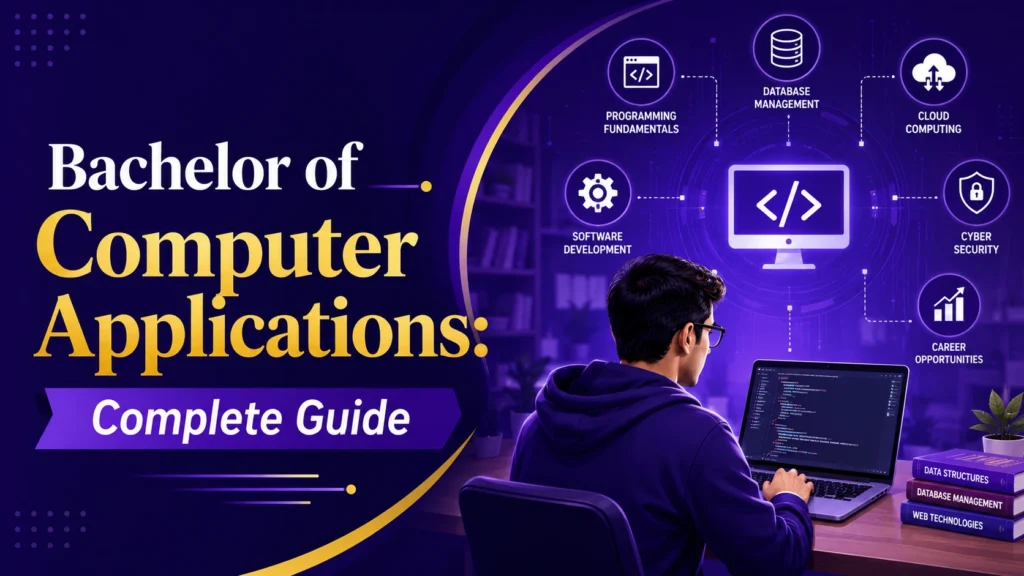
Choosing the right undergraduate degree can shape the entire trajectory of your career, and the Bachelor of Computer Applications (BCA) has remained one of the most popular choices for students who want to build a strong foundation in computer science without committing to a longer engineering program. Whether you are a high school graduate exploring options or someone considering a career switch into technology, understanding what a Bachelor of Computer Applications actually involves will help you make an informed decision.
In this guide, we will walk through everything related to the Bachelor of Computer Applications degree, including eligibility, subjects, skills, career paths, salary expectations, and how it compares to similar degrees. By the end, you will have a clear picture of whether a Bachelor of Computer Applications is the right fit for you.
What Is a Bachelor of Computer Applications (BCA)?
A Bachelor of Computer Applications is an undergraduate degree program focused on computer science, software development, and information technology. It is typically a three year program, though duration can vary slightly depending on the institution and country.
The Bachelor of Computer Applications is designed to give students a practical, application oriented understanding of computing rather than the heavily theoretical and mathematics intensive approach found in traditional engineering degrees. This makes the Bachelor of Computer Applications an attractive option for students who want to enter the tech industry quickly while still gaining a solid academic foundation.
Unlike some specialized technical degrees, a Bachelor of Computer Applications program often blends programming, business applications, and computer fundamentals, preparing graduates for a wide range of roles in the technology sector.
| Aspect | Typical Detail | Notes |
|---|---|---|
| Degree Type | Undergraduate | Bachelor’s level qualification |
| Duration | 3 years (varies) | Some institutions offer 3 to 4 year program formats |
| Focus Area | Application-based computing | Combines theoretical knowledge with practical computing skills |
| Entry Level | After secondary education | Admission requirements vary by country and institution |
BCA Eligibility Criteria You Should Know
Eligibility requirements for a Bachelor of Computer Applications vary by institution and country, but there are some common threads. Most programs require students to have completed secondary or high school education, often with a background in mathematics or science, though some institutions accept students from any academic stream.
Since requirements can differ significantly across regions, it is always best to check directly with the specific university or college offering the Bachelor of Computer Applications program. However, the general pattern includes a minimum grade requirement, sometimes an entrance examination, and occasionally an interview or aptitude test.
| Requirement | Common Expectation | Varies By |
|---|---|---|
| Academic Background | High school or secondary education completed | Institution |
| Preferred Subjects | Mathematics or Science (often optional) | Country and college |
| Entrance Test | May be required | University admission policy |
| Minimum Grades | Institution-defined eligibility threshold | Region |
Core Subjects and Syllabus Covered in a BCA Program
The syllabus of a Bachelor of Computer Applications program is designed to build both foundational and applied computing knowledge. While exact subjects vary between institutions, most Bachelor of Computer Applications curriculums commonly include the following areas.
Programming fundamentals form the backbone of the degree, covering languages such as C, Java, Python, and increasingly, web focused languages like JavaScript. Database management systems are another core component, teaching students how to design, query, and manage structured data efficiently.
Other commonly included subjects are computer networks, operating systems, software engineering principles, data structures and algorithms, web development, and often an introduction to emerging areas like cloud computing or mobile application development. Many Bachelor of Computer Applications programs also include business communication and mathematics courses to round out the curriculum.
| Subject Area | What It Covers | Typical Year |
|---|---|---|
| Programming Fundamentals | C, Java, Python basics | Year 1 |
| Data Structures and Algorithms | Logic building, problem solving | Years 1 to 2 |
| Database Management Systems | SQL, database design | Year 2 |
| Computer Networks | Networking concepts and protocols | Year 2 |
| Software Engineering | Software development lifecycle, project management | Year 3 |
| Web and Mobile Development | Front-end, back-end, and mobile application development basics | Years 2 to 3 |
Skills You’ll Gain During Your BCA Journey
A Bachelor of Computer Applications program does more than teach technical concepts. It shapes a well rounded skill set that prepares graduates for real world technology roles.
On the technical side, students gain proficiency in coding, debugging, and building software applications. They also develop an understanding of system design, database handling, and basic cybersecurity awareness. Many programs incorporate hands on projects, giving students practical experience before they even graduate.
Beyond technical ability, a Bachelor of Computer Applications also nurtures soft skills that are equally valuable in the workplace. These include analytical thinking, structured problem solving, effective communication, and the ability to work collaboratively in team based projects, which mirrors how most technology companies operate.
BCA vs B.Tech vs B.Sc Computer Science: What’s the Difference?
One of the most common questions students ask is how a Bachelor of Computer Applications compares to other computing degrees like B.Tech or B.Sc Computer Science. While all three degrees deal with computer science, they differ in depth, focus, and career orientation.
A B.Tech in Computer Science tends to be more engineering focused, with heavier emphasis on mathematics, physics, and theoretical foundations, typically spanning four years. A B.Sc Computer Science leans toward scientific and theoretical computing concepts. In contrast, the Bachelor of Computer Applications is more application driven, emphasizing practical software development and industry readiness within a shorter timeframe.
| Degree | Focus | Typical Duration | Best Suited For |
|---|---|---|---|
| Bachelor of Computer Applications (BCA) | Applied computing and software development | 3 years | Students seeking quicker entry into the IT and software industry |
| B.Tech Computer Science | Engineering principles and theoretical computer science | 4 years | Students interested in core engineering and technology roles |
| B.Sc Computer Science | Scientific and theoretical computing | 3 years | Students planning careers in research, academia, or advanced computing studies |
Why Choose a BCA Degree: Key Benefits
There are several reasons why students continue to choose the Bachelor of Computer Applications as their entry point into the technology field.
- First, it is generally more time and cost efficient compared to a four year engineering degree, allowing graduates to enter the workforce sooner.
- Second, the Bachelor of Computer Applications offers flexibility. Graduates can move directly into industry roles or continue their education with a master’s program.
- Third, because the curriculum is application focused, students often graduate with practical, job ready skills rather than purely theoretical knowledge.
- Finally, the broad nature of a Bachelor of Computer Applications means graduates are not limited to one narrow specialization. They can pursue roles in software development, data management, IT support, systems analysis, and more, giving them flexibility as their interests evolve.
Career Opportunities After Completing BCA
Graduates of a Bachelor of Computer Applications program have access to a wide array of career paths across industries. Since nearly every sector today relies on technology, the demand for BCA graduates spans finance, healthcare, retail, education, and beyond.
Common roles include software developer, web developer, systems analyst, database administrator, IT consultant, and technical support specialist. As graduates gain experience, many move into specialized areas such as software architecture, project management, or technical leadership positions.
| Career Path | Core Responsibility | Growth Direction |
|---|---|---|
| Software Developer | Building and maintaining software applications | Senior Software Developer, Software Architect |
| Web Developer | Designing, developing, and maintaining websites | Full Stack Developer, Technical Team Lead |
| Systems Analyst | Evaluating business requirements and improving IT systems | IT Manager, Business Analyst |
| Database Administrator | Managing, optimizing, and securing database systems | Data Architect, Database Manager |
| IT Consultant | Advising organizations on technology strategies and solutions | Senior IT Consultant, Project Manager |
Average Salary Expectations for BCA Graduates
Salary outcomes for Bachelor of Computer Applications graduates vary significantly based on region, industry, company size, and individual experience, so it is difficult to state a universal figure. That said, entry level roles typically offer competitive starting compensation compared to other undergraduate degrees, and salaries tend to grow steadily with experience and skill development.
Rather than relying on fixed numbers that can quickly become outdated, it is more useful to understand the general trajectory. Early career roles usually focus on foundational technical positions, mid career professionals often move into specialized or supervisory roles with corresponding pay increases, and experienced professionals with strong technical or leadership skills can command significantly higher compensation.
For the most accurate and current salary figures relevant to your location, consulting regional job market reports or salary comparison platforms is recommended, since these are updated more frequently than a general guide can reflect.
Higher Studies After BCA: MCA, MBA, and Beyond
Many students choose to pursue further studies after completing their Bachelor of Computer Applications to deepen their expertise or open up new career paths. The most common progression is a Master of Computer Applications (MCA), which builds directly on the foundation established during the Bachelor of Computer Applications and offers more advanced technical training.
Alternatively, some graduates opt for a Master of Business Administration (MBA), particularly if they are interested in moving into management or leadership roles within the technology sector. Others pursue specialized certifications in areas like cybersecurity, data science, cloud computing, or artificial intelligence to complement their Bachelor of Computer Applications background.
| Path | Focus | Ideal For |
|---|---|---|
| MCA | Advanced computer applications | Students seeking deeper technical expertise and advanced software development skills |
| MBA | Business and management | Graduates aiming for leadership, management, or business-oriented roles |
| Specialized Certifications | Niche technical skills | Professionals looking to build expertise in specific technologies or domains |
Tips for Choosing the Right BCA Program
Not all Bachelor of Computer Applications programs are created equal, so it is worth evaluating a few key factors before enrolling. Start by checking the accreditation and reputation of the institution, since this can affect both the quality of education and future employability.
Next, review the curriculum closely to ensure it covers current, relevant technologies rather than outdated material. Look for programs that offer practical exposure through internships, projects, or industry partnerships, as hands on experience is invaluable in the technology field. Finally, consider faculty expertise and available support services, since mentorship can significantly impact your learning experience during your Bachelor of Computer Applications journey.
Common Myths About BCA Debunked
There are several misconceptions surrounding the Bachelor of Computer Applications degree that are worth addressing. One common myth is that a Bachelor of Computer Applications is “easier” or less valuable than an engineering degree. In reality, it simply has a different focus, emphasizing practical application over theoretical depth, and both paths lead to legitimate, rewarding careers.
Another myth is that Bachelor of Computer Applications graduates have limited job prospects compared to engineering graduates. This is not accurate, as many successful software developers, analysts, and IT professionals hold a Bachelor of Computer Applications degree and have built strong careers in the technology industry.
A third misconception is that the Bachelor of Computer Applications curriculum is outdated. While curriculum quality varies by institution, many programs continuously update their coursework to include current tools and technologies relevant to the modern job market.
Frequently Asked Questions BCA
- Is a Bachelor of Computer Applications a good degree choice?
Yes, for students seeking a practical, industry oriented computing education in a shorter timeframe, the Bachelor of Computer Applications is a strong option. - Can I pursue a master’s degree after BCA?
Absolutely. Many graduates continue with an MCA, MBA, or specialized technical certifications after completing their Bachelor of Computer Applications. - What is the difference between BCA and B.Tech?
A Bachelor of Computer Applications is generally shorter and more application focused, while B.Tech is engineering oriented with deeper theoretical and mathematical content. - What jobs can I get with a BCA degree?
Common roles include software developer, web developer, systems analyst, database administrator, and IT consultant, among others. - Does BCA require a mathematics background?
Requirements vary by institution, but many Bachelor of Computer Applications programs accept students from diverse academic backgrounds, not just mathematics or science streams.
Conclusion
The Bachelor of Computer Applications remains a relevant and practical pathway into the technology industry, offering a balanced mix of technical skills, flexibility, and career readiness. Whether your goal is to enter the workforce quickly or build a foundation for further studies, understanding the structure and opportunities tied to a Bachelor of Computer Applications can help you make a confident, informed decision about your academic and professional future.
If you are exploring your options, take time to research specific programs, compare curriculums, and speak with academic advisors to find the Bachelor of Computer Applications path that aligns best with your goals.